Hack for Impact
Designing internal systems for a growing nonprofit network
Hack for Impact is a national nonprofit that partners with social good organizations to build impactful technology solutions. Through its university chapters, Hack for Impact connects student volunteers with nonprofits addressing critical community needs—providing students with real-world experience while supporting mission-driven work at scale.
This project focused on designing an internal onboarding and registration flow as part of a broader effort to centralize Hack for Impact’s operations across chapters.
TL;DR
I led the design of an internal onboarding and application system for Hack for Impact’s MVP, translating ambiguous organizational processes into a clear, scalable flow. The work focused on progressive disclosure, error recovery, and designing trust into human review systems—laying the foundation for future internal tools.
My Role
UX Design Lead
Led a team of 2–4 student designers
Worked cross-functionally with a Product Manager, Executive Officer, and engineering team
Owned design direction, user research synthesis, and flow definition
Acted as the primary decision-maker and communication bridge across design, product, and engineering.
Context
A Growing Organization, Fragmented Systems
Hack for Impact operates as a network of university chapters across the country. Each chapter runs its own projects, manages its own members, and—over time—has developed its own tools and workflows to get work done.
While this decentralized structure enables autonomy, it also creates operational friction. As the organization scaled, leadership identified the need for a centralized internal system to support consistency, visibility, and long-term sustainability across chapters.
The first step toward that larger vision was defining and building an MVP—starting with onboarding.
The Challenge
Designing Without a Clearly Defined Product
Although the goal of “centralization” was clear, the form it should take was not.
Early in the project, fundamental questions remained unresolved:
Who was this tool for—new applicants, current members, or administrators?
Was this an internal system or an extension of the public-facing website?
Was the primary function onboarding, task management, or data storage?
Should this behave like a productivity tool or a backend database?
Rather than a single, well-defined problem, the team was facing an evolving set of organizational needs.
The core challenge became defining what to build before designing how it should work.
Research & What We Learned
Understanding How Chapters Actually Operate
To ground decisions in reality, we conducted user interviews with:
chapter leaders
national leadership
student volunteers
Across roles, a consistent pattern emerged: chapters relied on a patchwork of tools to operate—Slack for communication, Notion or Google Drive for documentation, GitHub and Figma for project work.
While these tools functioned adequately in isolation, users consistently expressed frustration with the lack of a single source of truth.
Key pain points included:
difficulty accessing standardized member and leadership information
scattered financial and donation records
inconsistent project documentation across chapters
The issue wasn’t individual tools—it was the absence of centralized data and shared structure.
Defining the MVP
From Ambiguity to Alignment
Through ongoing collaboration with stakeholders, the scope of the MVP gradually came into focus.
Rather than attempting to solve every operational issue at once, we intentionally narrowed the problem space:
The product would be purely internal
The initial goal would be data collection, storage, and retrieval
Task management and advanced workflows would be deferred
The onboarding flow became the foundation of this system—designed to register existing members and centralize core information about people, projects, and partner nonprofits.
This decision allowed the team to deliver immediate value while laying groundwork for future expansion.
Design Exploration
From Explicit Complexity to Guided Confidence
Early design exploration focused on making Hack for Impact’s application process legible in the face of organizational ambiguity. Initial wireframes emphasized explicit branching, single-question steps, and visible decision points to ensure applicants understood how their application would be reviewed.
As stakeholder alignment improved and internal workflows became better defined, the design direction shifted. Rather than asking users to navigate organizational structure directly, the final flow absorbs that complexity through conditional logic and structured sections. This allowed the experience to feel more confident and cohesive without sacrificing transparency.
Key explorations included:
Testing early path separation versus unified application flows
Balancing interview-style pacing with form efficiency
Evaluating when to surface decisions versus handling them implicitly
Designing upload interactions that felt supportive rather than intimidating
The final solution reflects these learnings: a guided, multi-step application that maintains clarity while reducing cognitive overhead. Organizational ambiguity remains present, but no longer burdens the applicant with managing it.
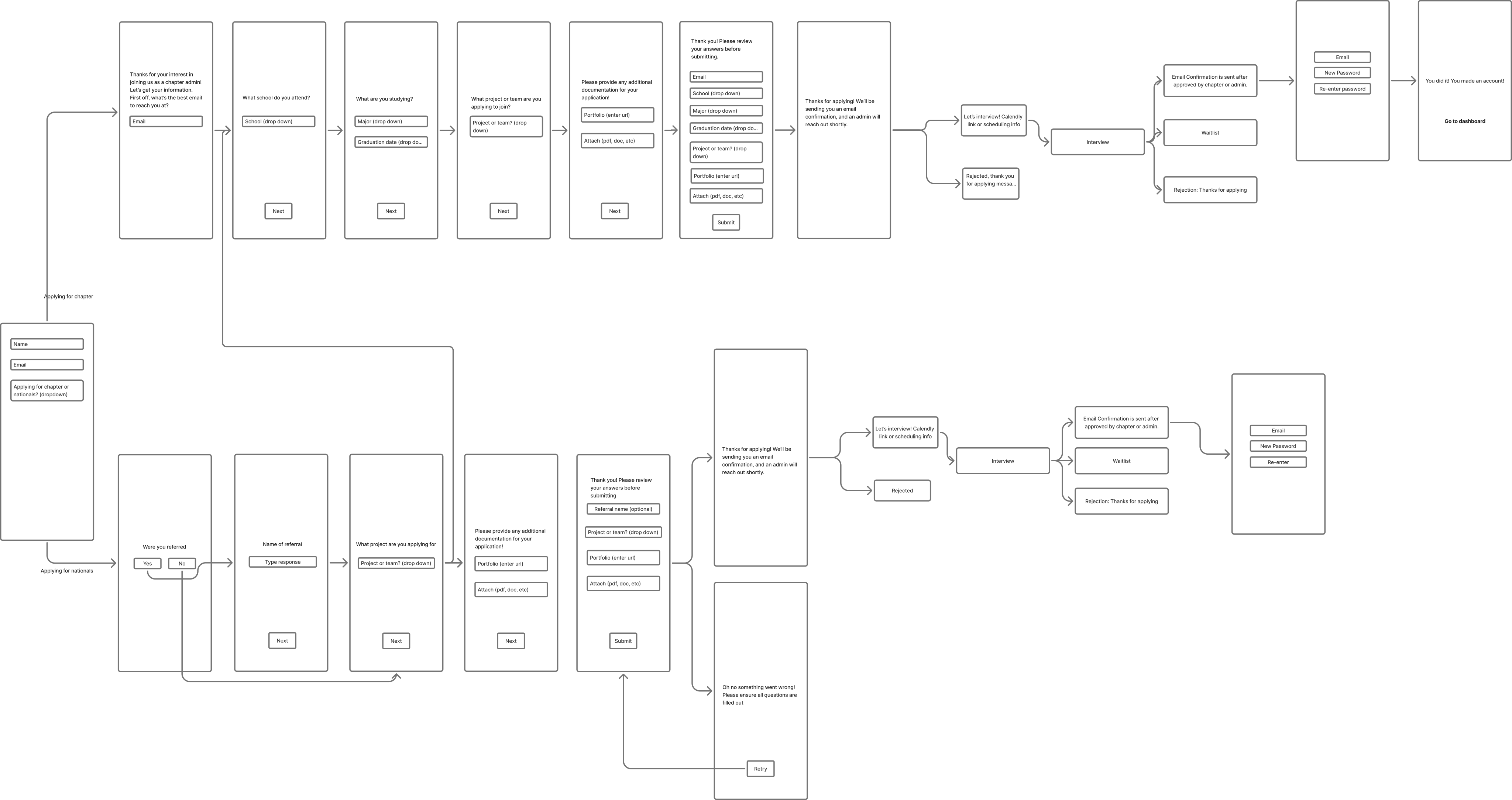
Early lo-fi exploration focused on making organizational structure explicit, mapping different application paths and review states before optimizing for efficiency.
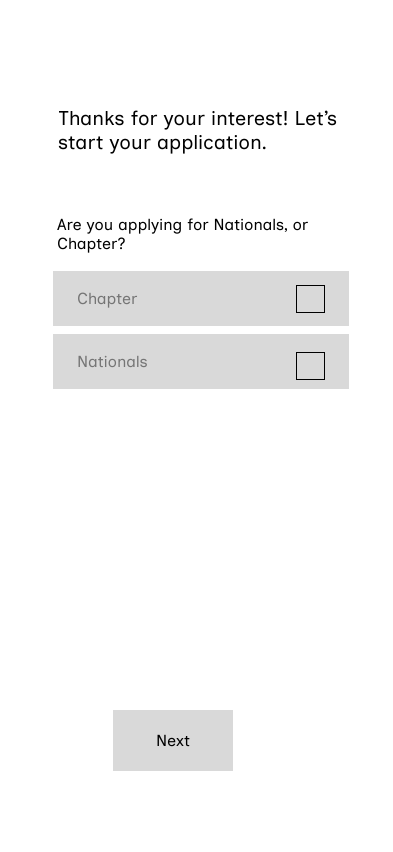
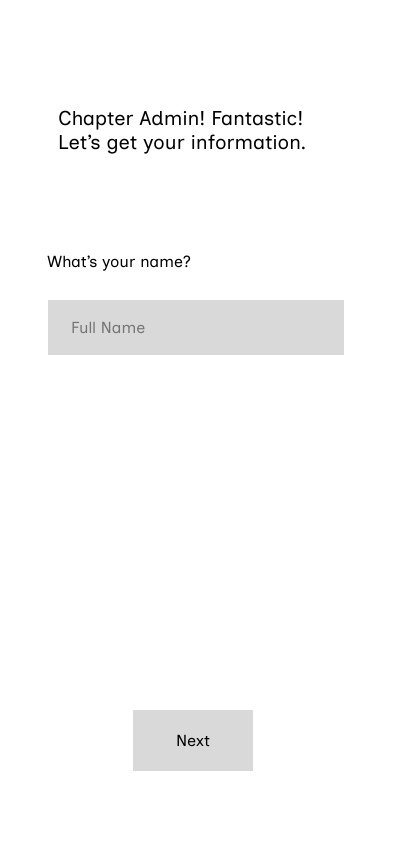
Initial wireframes emphasized single-question steps and visible decision points to reduce ambiguity and help applicants understand how their application would be reviewed.
Final Flow
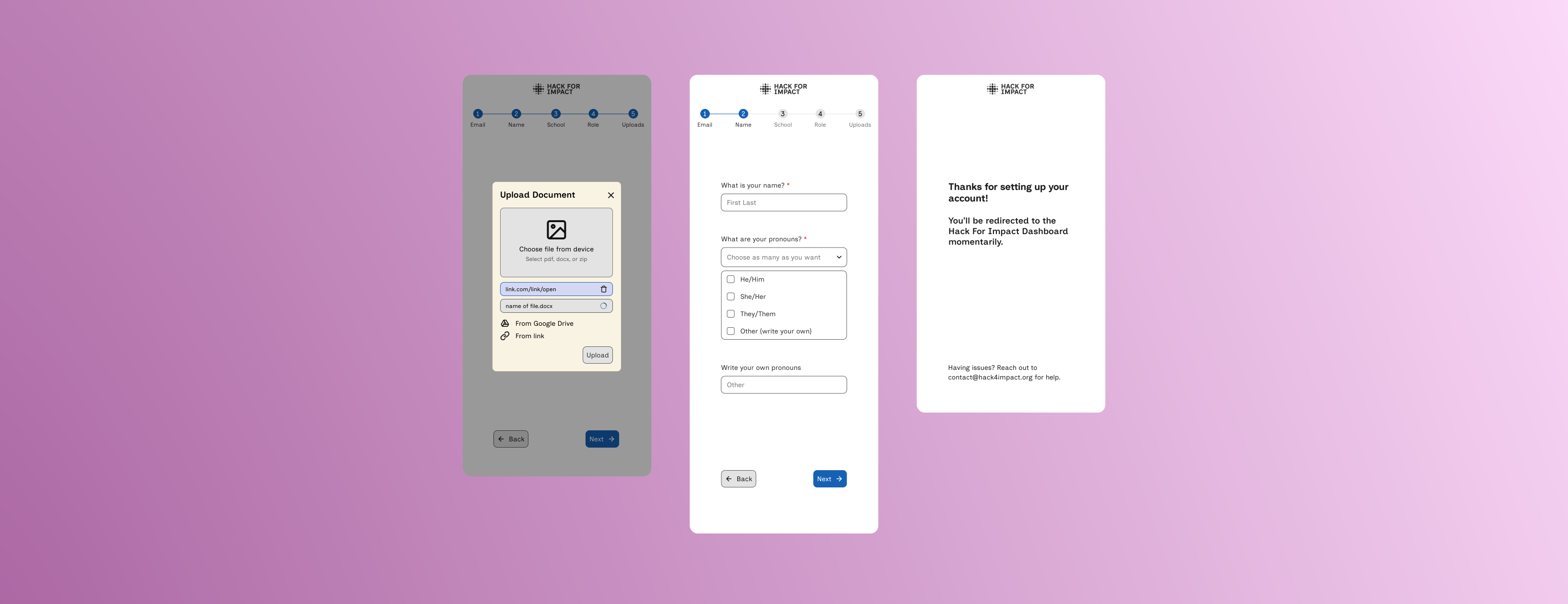
The final application and onboarding flow was shipped across mobile and desktop, supporting prospective Hack for Impact members from initial application through conditional account creation.
Rather than treating the experience as a simple sign-up, the flow was intentionally designed to reflect Hack for Impact’s real review process: applications are submitted first, reviewed by administrators, and only then converted into active accounts. This distinction helped set clear expectations while maintaining trust.
To reduce cognitive fatigue in a longer, multi-step process, the final design introduced:
A visible progress indicator to establish momentum and completion confidence
Contextual helper text and examples within form fields to reduce ambiguity
Clear, conversational copy that prioritized understanding over formality
Error states and edge cases were also fully designed, including validation feedback, upload failures, and incomplete submissions. These moments were treated as part of the core experience rather than afterthoughts, ensuring applicants always understood what went wrong and how to recover.
Together, these decisions resulted in a guided, transparent flow that absorbed organizational complexity without placing that burden on the user.
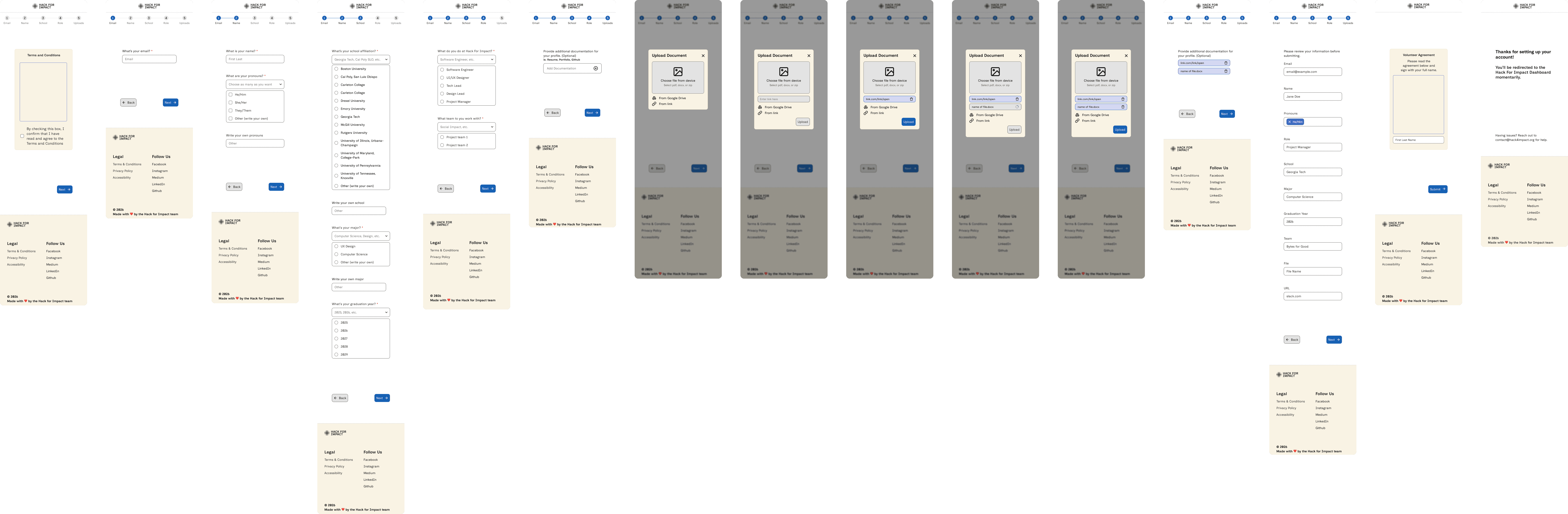
The final application flow consolidated earlier branching into a unified, guided experience that absorbs organizational complexity through structure and conditional logic.
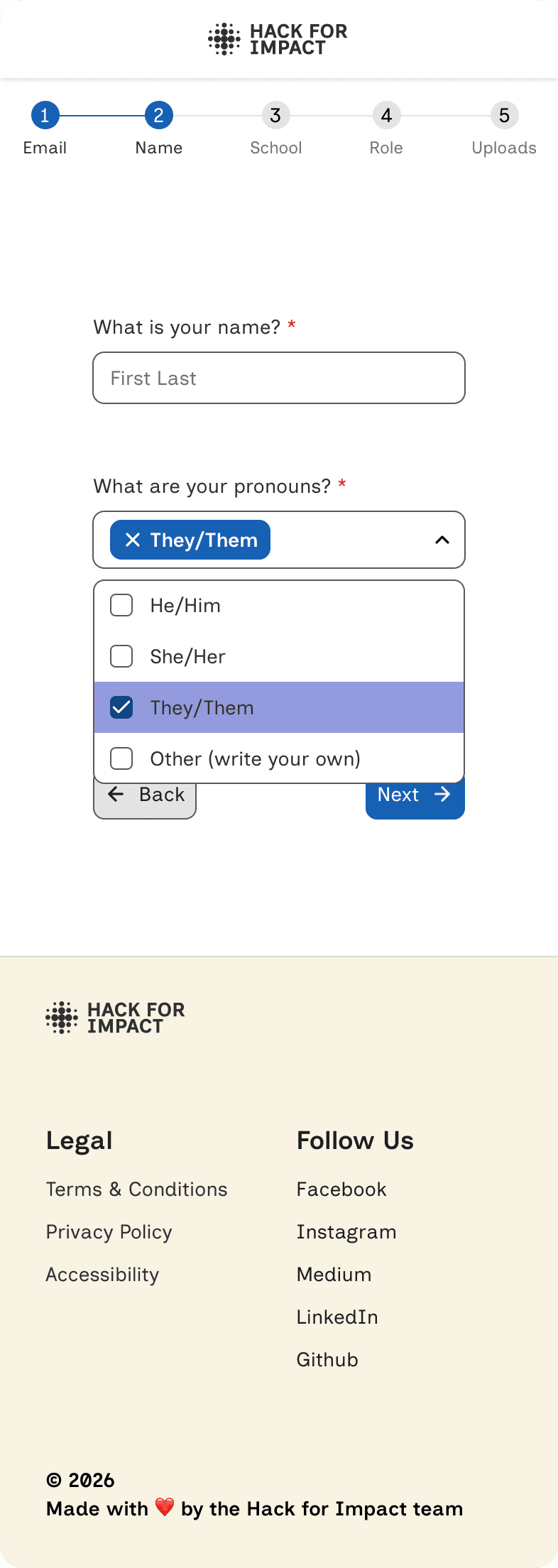
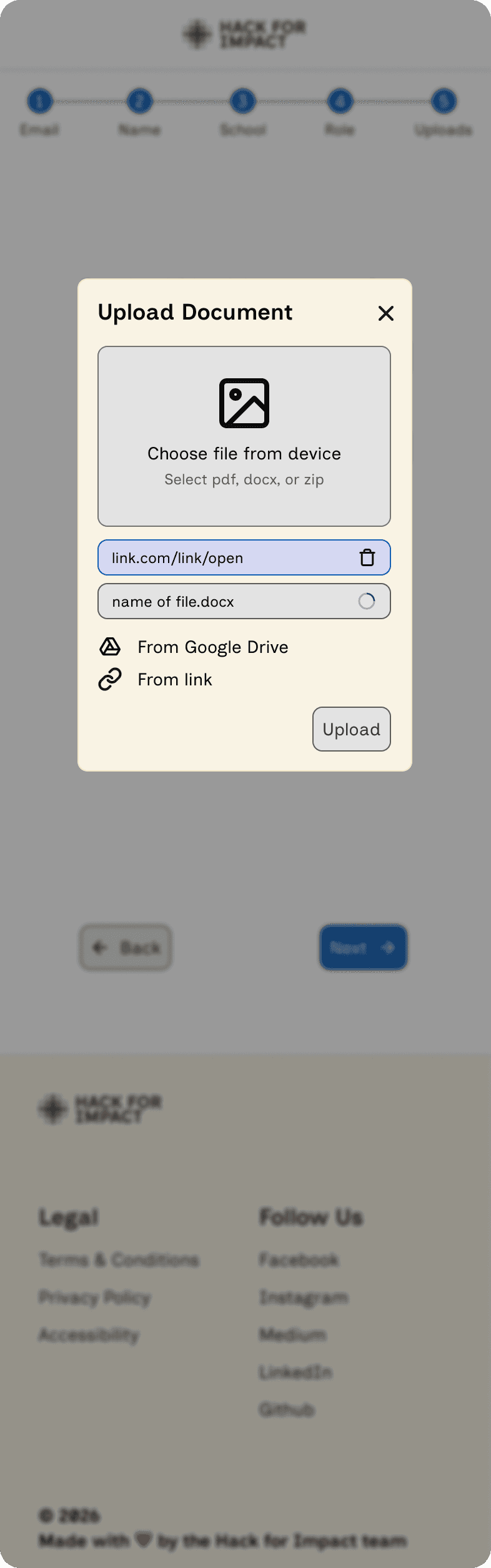
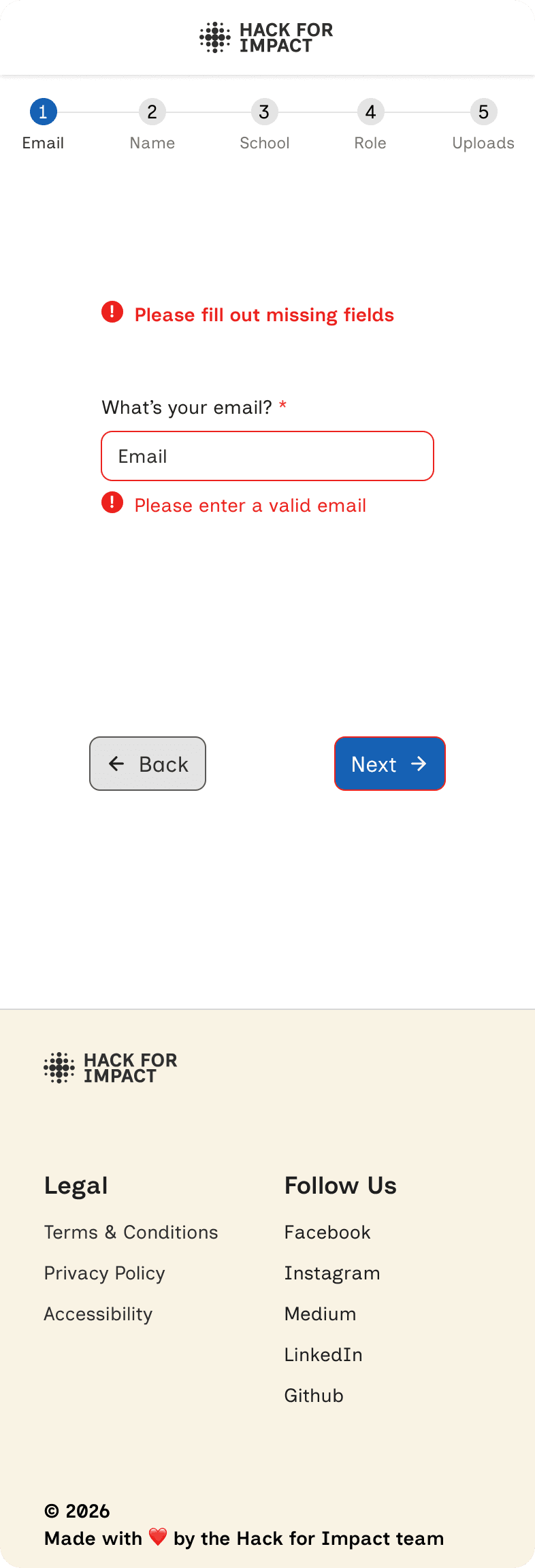
High-friction moments such as file uploads and validation errors were designed as first-class interactions, with clear feedback and recovery paths to maintain user trust.
Outcomes & Reflection
The application and onboarding flow was finalized and handed off for Hack for Impact’s MVP, supporting ongoing development across mobile and desktop.
Throughout the build phase, I acted as the primary design partner for engineering, providing clarification on interaction behavior, edge cases, and system states. This project emphasized the value of designing for ambiguity—creating experiences that feel structured and trustworthy even when underlying workflows are still in flux. This project expanded my role from individual contributor to design lead, shaping not just the interface but the process by which decisions were made and communicated.
The resulting framework now informs ongoing work on Hack for Impact’s internal dashboard, where I will be leading a larger, cross-chapter design effort.