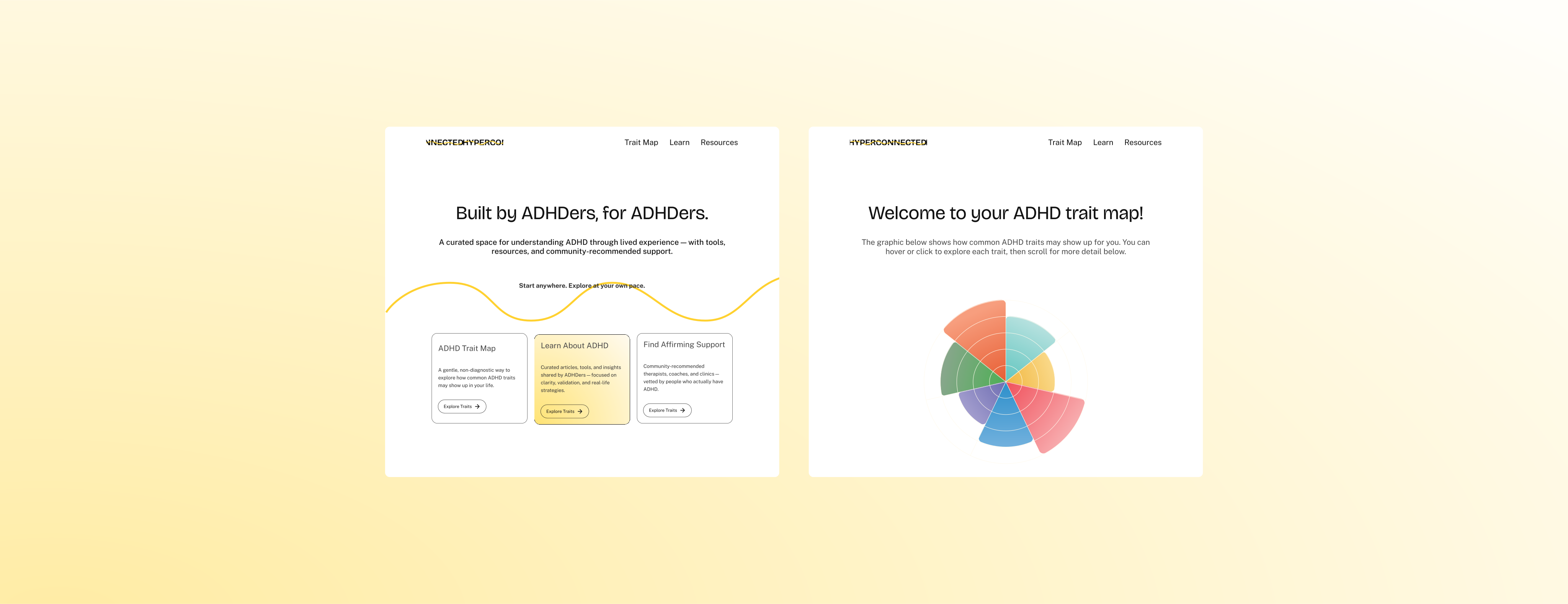
Hyperconnected
Understanding ADHD through lived experience.
Hyperconnected is a conceptual resource hub for ADHD adults navigating diagnosis, self-understanding, and next steps. Centered on lived experience, it offers ADHD-affirming education, exploratory tools, and community-vetted support—without pressure to self-diagnose.
TL;DR
ADHD adults often leave diagnosis (or self-diagnosis) without practical, affirming guidance
Existing resources are information-dense, overwhelming, and rarely centered on lived experience
Research showed users value validation and peer insight over clinical abstraction
Hyperconnected reframes onboarding and learning as exploration, not evaluation
The Problem
The Gap Between Diagnosis and Understanding
As awareness of ADHD increases, more adults are seeking assessments and information later in life. However, the diagnostic process itself often marks the end of formal support rather than the beginning of understanding.
Newly diagnosed and ADHD-curious adults are left to navigate:
stigma-heavy online discourse
dense, clinical explanations that don’t map to lived experience
tools that reduce complex traits into binary outcomes
Rather than feeling supported, many users are left questioning whether their experiences are real, valid, or worth addressing—especially when they don’t fit stereotypical narratives of ADHD.
The challenge was not a lack of information, but a lack of usable, affirming context to help adults understand how ADHD actually shows up in their daily lives.
Research & Insights
Designing with ADHD Adults, Not Around Them
To ground the project in real needs, I conducted qualitative interviews with ADHD-diagnosed and ADHD-curious adults, alongside an expert interview with an ADHD therapist and coach. I also crowdsourced trusted resources directly from ADHD communities to understand what people actually use and value.
Across research methods, two core themes emerged.
Theme 1: Trust & Validation
Validation Comes Before Education
Participants were not looking to be “convinced” they had ADHD. They wanted language and frameworks that reflected their lived experience and helped them feel understood. Resources that jumped straight to clinical explanation often felt alienating, while peer-driven content helped users contextualize their experiences without shame.
Lived Experience Is a Trust Signal
Participants consistently expressed skepticism toward ADHD resources that did not visibly include ADHD voices. Blogs, forums, and social content created by ADHDers were viewed as more trustworthy than institutional sites.
As one participant shared: “I wouldn’t trust any resource about ADHD that didn’t include ADHD voices.”
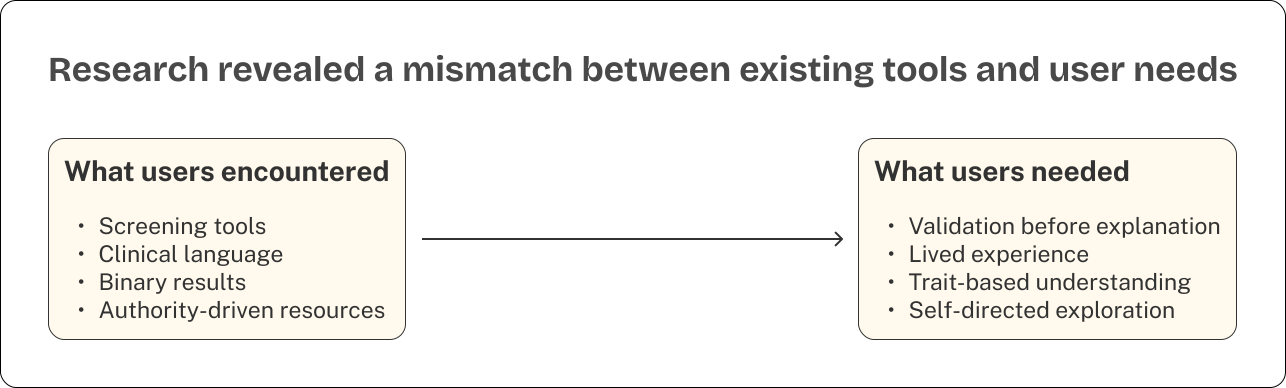
Research showed that evaluation-first tools increased uncertainty, while exploration-based approaches supported trust and understanding.
Theme 2: Exploration Over Evaluation
Binary Tools Fail Complex Identities
Many participants described online screening tools as overly simplistic or emotionally invalidating. Numeric scores and pass/fail outcomes failed to capture the nuance of how ADHD traits present across different people and contexts, often leaving users more uncertain than before.
Support Is Needed on Both Sides of Diagnosis
Research revealed two overlapping but distinct needs: ADHD-curious adults seeking low-pressure self-exploration, and diagnosed adults looking for reliable, affirming next steps. Both groups wanted clarity and guidance—without feeling evaluated or pathologized in the process.
Design Impact
These insights shaped a core design principle for Hyperconnected: learning should feel exploratory, validating, and grounded in lived experience—not diagnostic or judgment-based.
Pivot
From Screening to Self-Exploration
Early concepts for Hyperconnected centered on a traditional onboarding quiz designed to help ADHD-curious users determine whether they “likely” had ADHD. The flow relied on a clinically inspired screening tool that produced a numerical score intended to guide next steps.
Usability testing revealed that this approach introduced more friction than clarity. Participants found numeric results confusing and overly reductive, describing the experience as emotionally flat and misaligned with how ADHD shows up in their lives. Several users noted that the outcome felt like a judgment rather than a starting point.
This feedback revealed a deeper issue: screening tools prioritize evaluation, while users needed validation and understanding.
In response, I reframed onboarding away from diagnostic framing and toward exploration. Instead of asking users to determine whether they “fit” ADHD, the redesigned flow invites them to explore how common ADHD traits may—or may not—manifest in their own experiences.
The updated approach uses a trait-based spectrum model, offering visual, descriptive feedback rather than a single outcome. This allows users to reflect, learn, and connect with relevant resources without being labeled or ranked.
By repositioning the quiz as a tool for self-discovery rather than assessment, Hyperconnected better supports users across different stages of diagnosis—while maintaining emotional safety and trust.
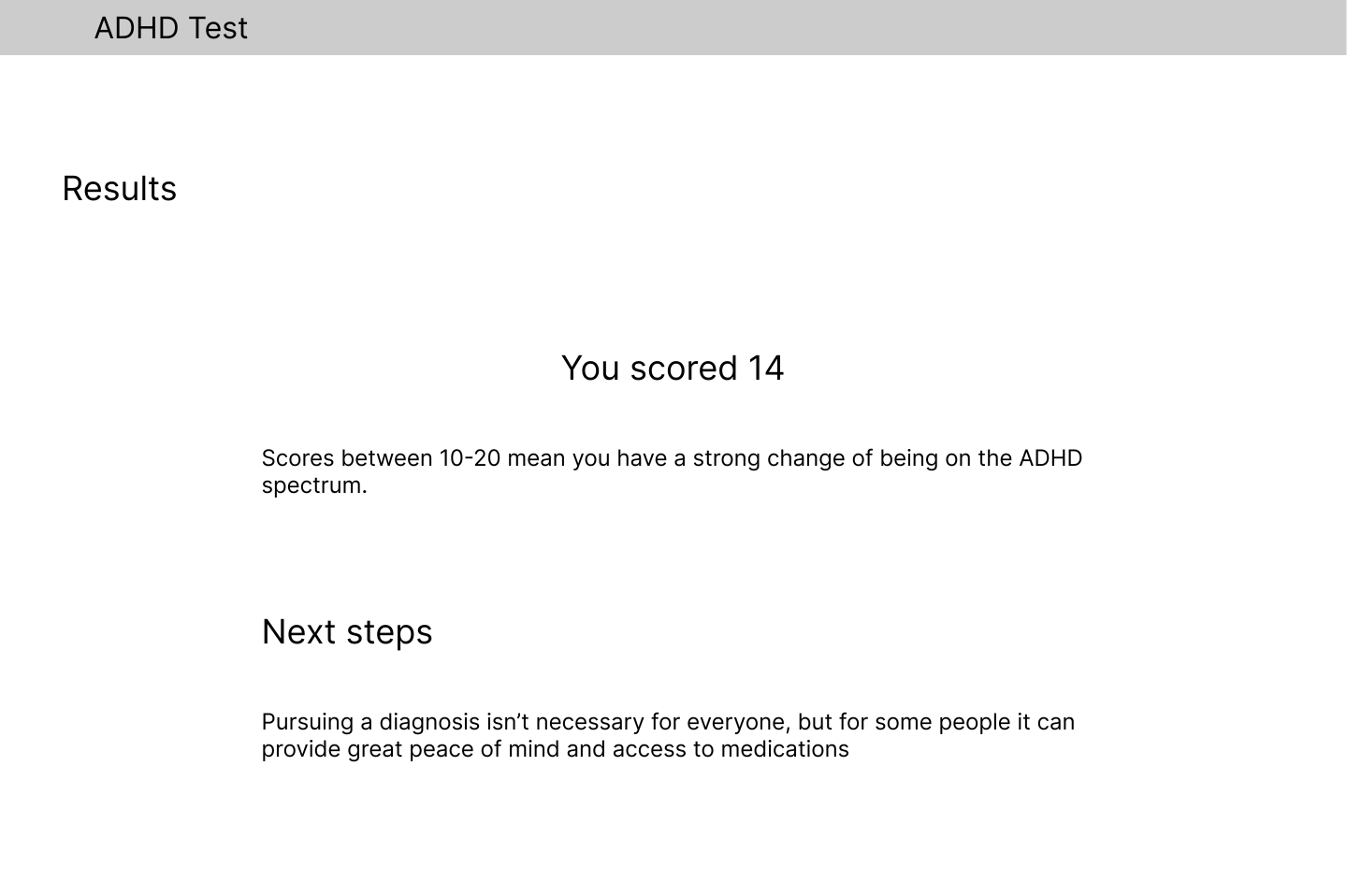
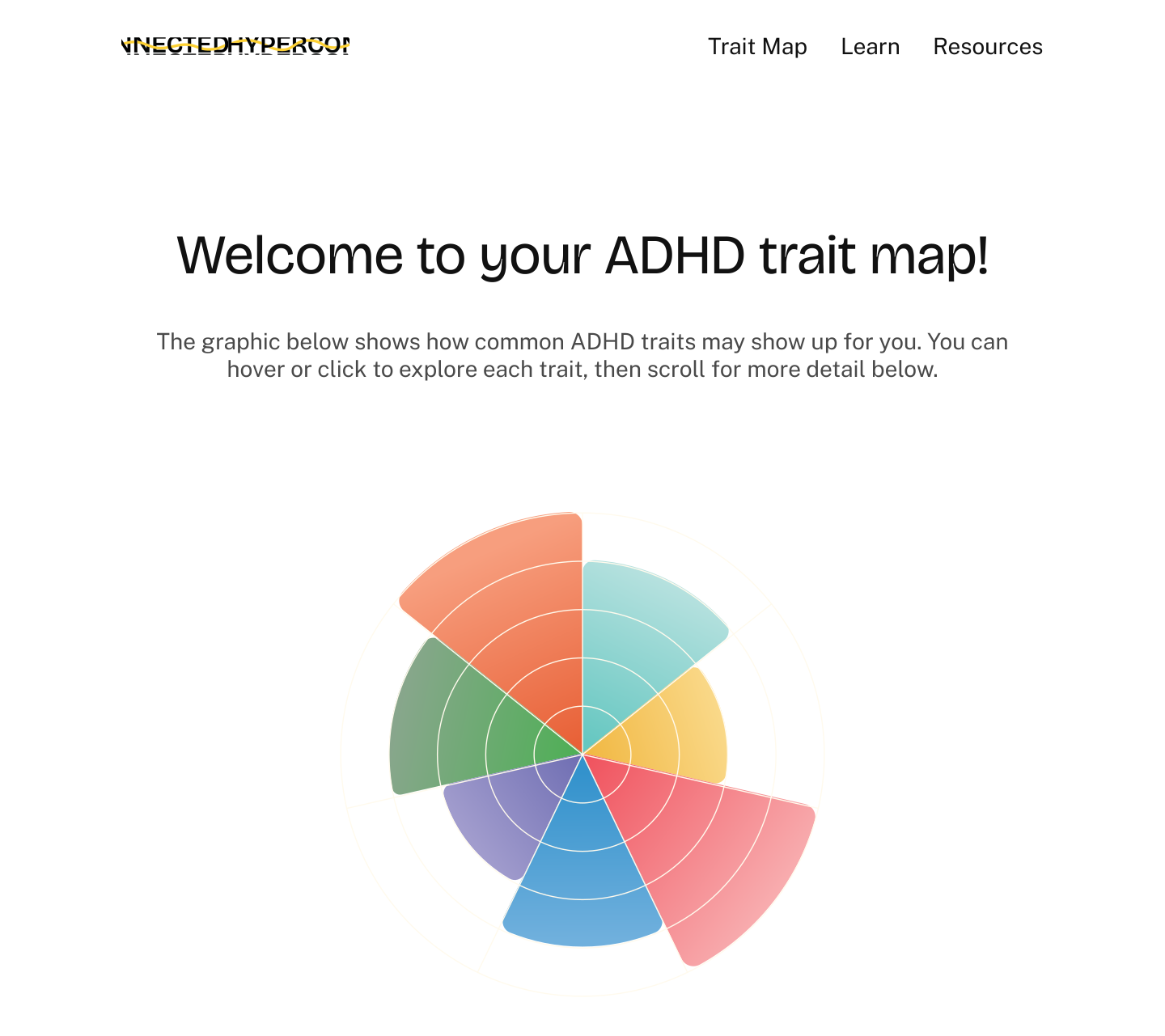
Research prompted a shift from screening-style evaluation to exploratory, trait-based learning.
User Experience
Supporting ADHD Adults at Different Stages
Hyperconnected is designed to support ADHD adults across different stages of diagnosis without forcing users into a single, linear journey. Rather than assuming a shared starting point, the experience offers multiple entry paths—allowing users to engage based on their needs, energy level, and comfort with the topic.
Two primary experiences emerged from research: exploratory self-understanding for ADHD-curious adults, and direct access to trusted resources for diagnosed adults.
ADHD-Curious Adults
A Low-Pressure Path to Self-Understanding
For users exploring the possibility of ADHD, Hyperconnected introduces a trait-based onboarding experience designed to encourage reflection rather than evaluation. Instead of producing a binary or diagnostic outcome, the questionnaire helps users explore how common ADHD traits may—or may not—show up in their lives.
Results are presented visually, paired with plain-language explanations of each trait. This format emphasizes patterns over scores, allowing users to contextualize their experiences without suggesting a formal diagnosis.
From there, users are guided toward curated resources aligned with the traits that resonated most. This creates a natural bridge between self-exploration and continued learning, without pressure to take immediate action.
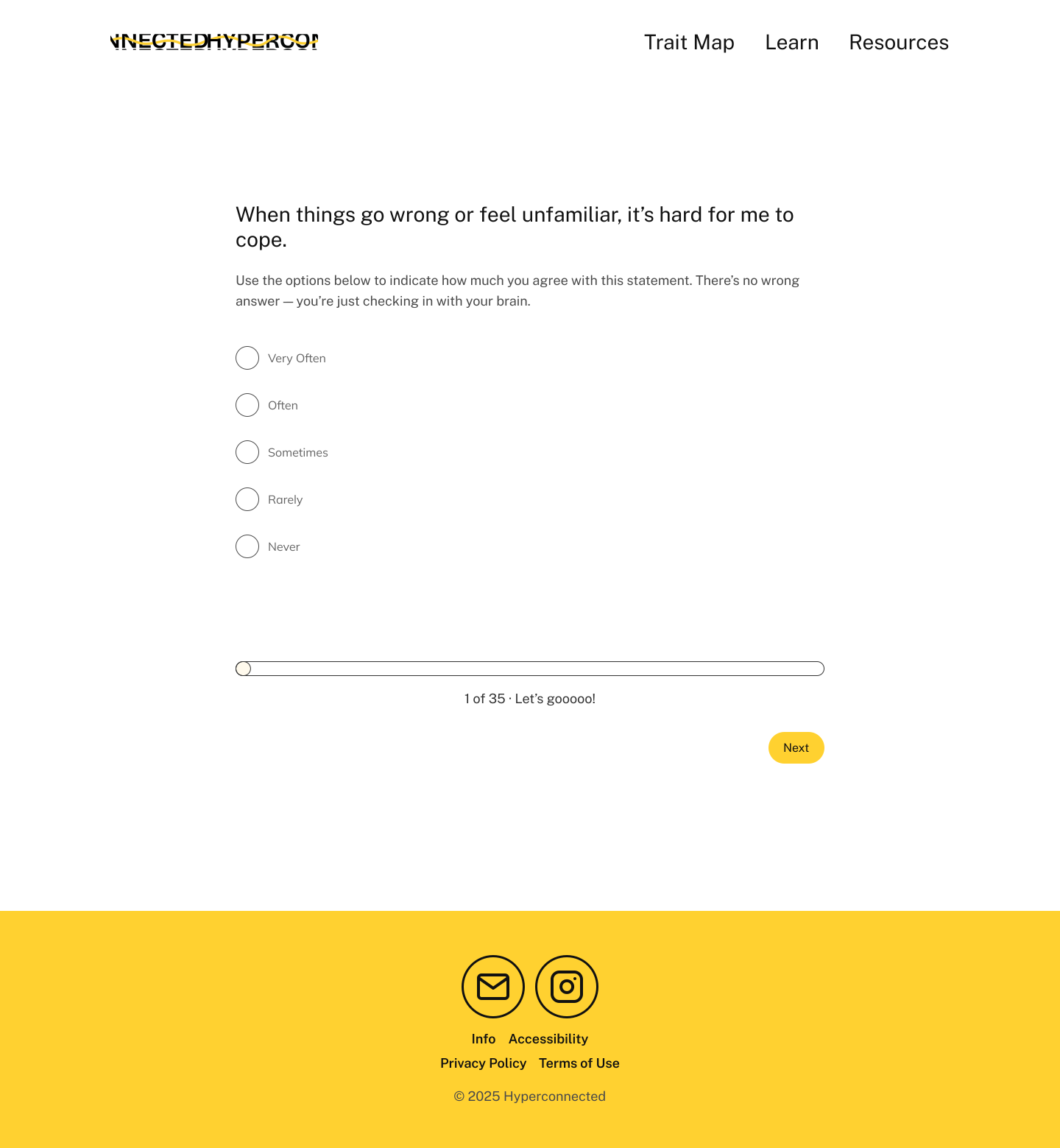
Trait questions are framed to encourage reflection, not evaluation.
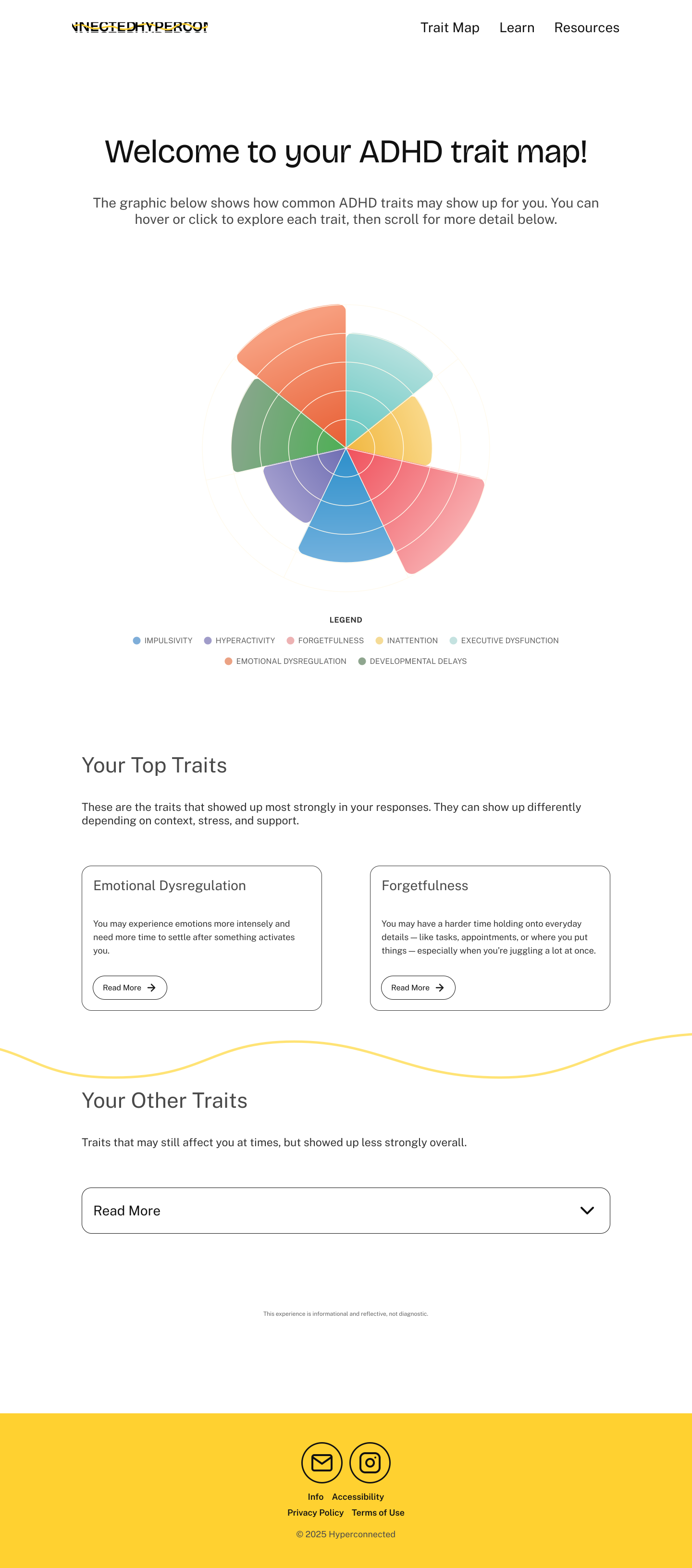
Visual trait mapping emphasizes patterns and resonance over diagnostic scores.
ADHD-Diagnosed Adults
Finding Trusted, ADHD-Affirming Resources
For users who already have an ADHD diagnosis, the experience prioritizes fast access to reliable support. The home page and navigation are designed to minimize decision fatigue, allowing users to quickly choose between self-directed resources and professional support.
Self-directed resources focus on practical strategies and insights written from an ADHDer perspective, helping users apply understanding to daily life. For those seeking professional support, Hyperconnected offers a curated directory of ADHD-affirming coaches, therapists, and clinics—each recommended by someone with lived experience.
This approach ensures that diagnosed users can move directly into action without re-engaging with introductory or evaluative content.
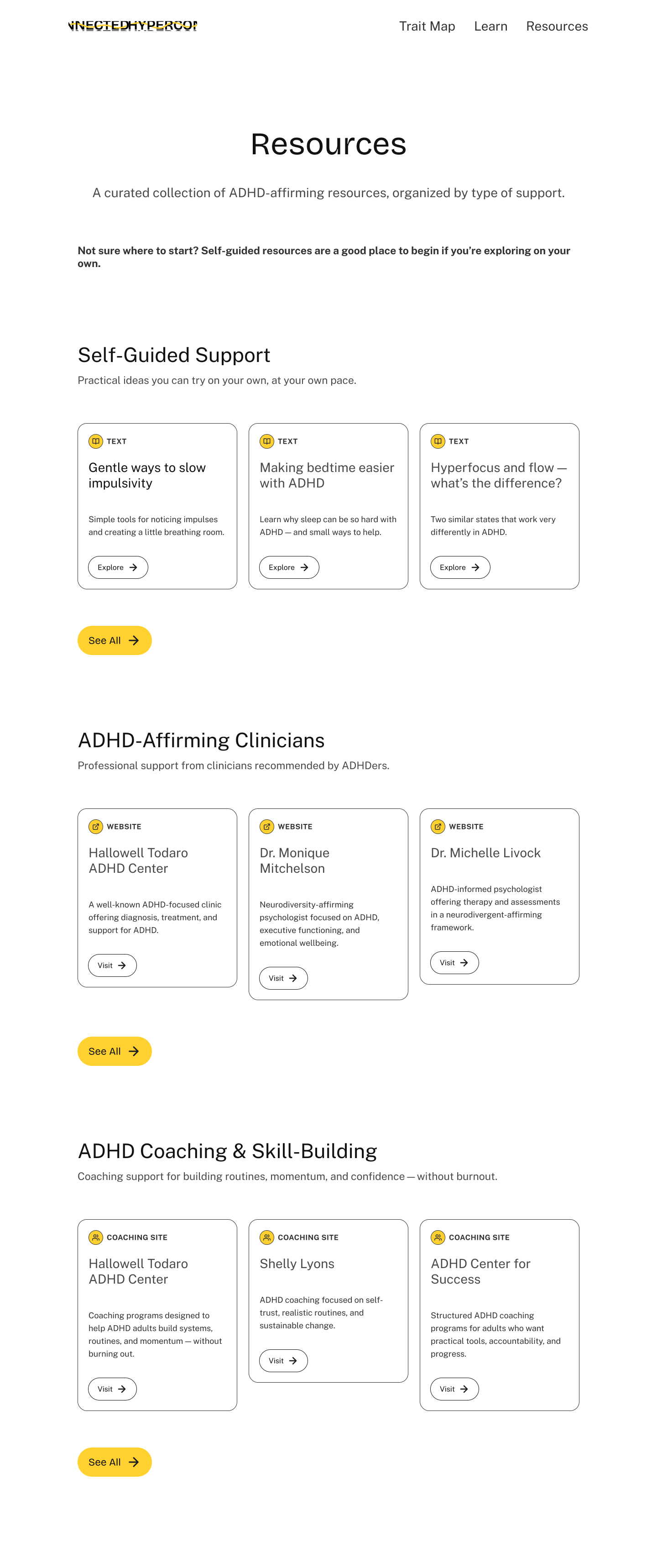
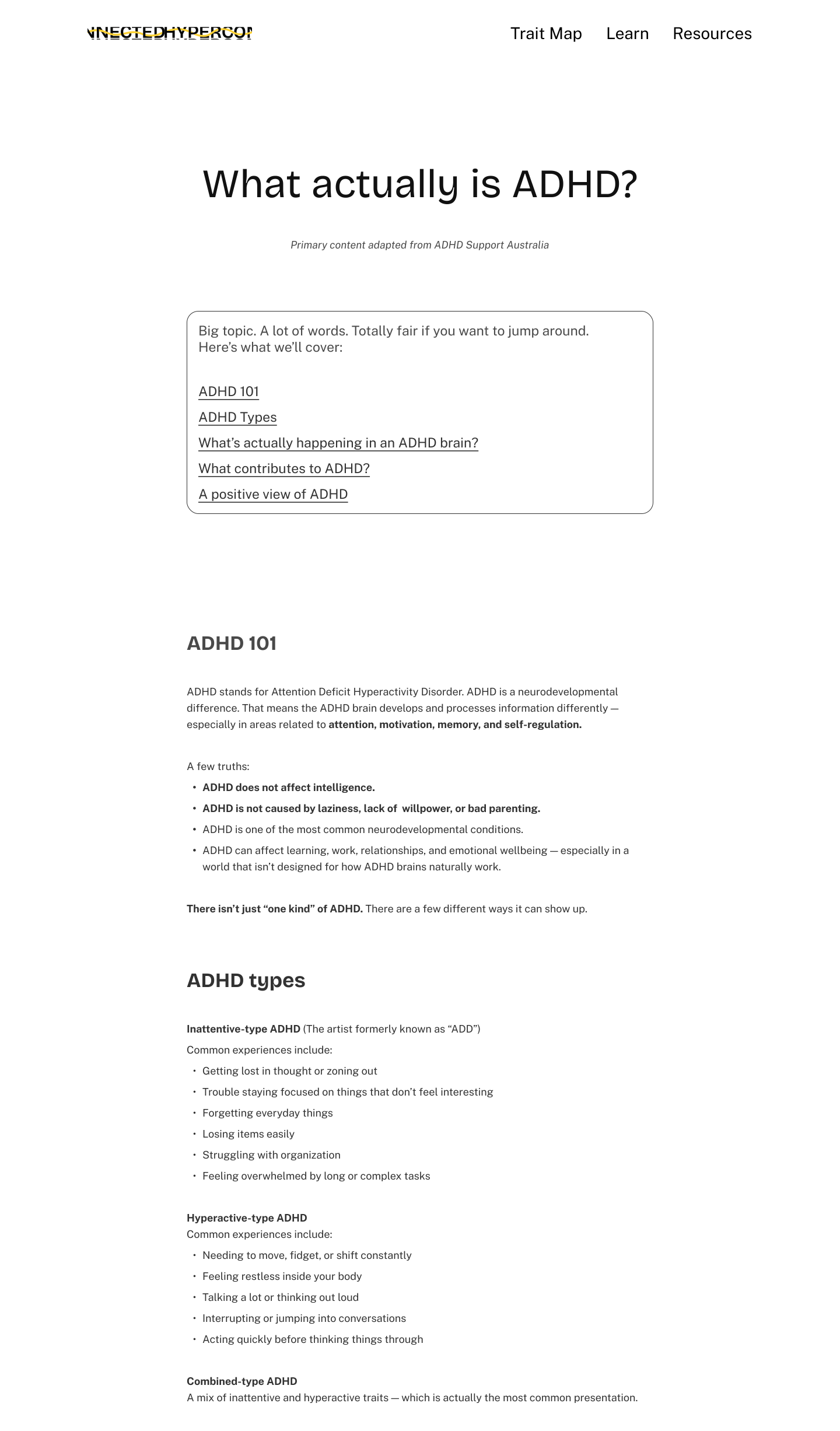
Resources are organized by type of support to reduce decision fatigue. And content is written from an ADHDer perspective, prioritizing clarity and lived experience.
Designing for Emotional Safety
Across both experiences, design decisions were guided by a consistent principle: users should feel supported, not assessed.
Language avoids medicalized framing, interactions are designed to reduce cognitive load, and users maintain control over how deeply they engage. By centering lived experience, consent, and clarity, Hyperconnected creates an environment where learning feels accessible rather than overwhelming.



Subtle interaction details reinforce that exploration is optional, supportive, and user-led.
Outcomes & Reflection
Building With the ADHD Community, Not Just for It
Hyperconnected was inspired by conversations with ADHD adults who described feeling unsupported or dismissed during assessment and self-discovery in adulthood. Many shared that while diagnosis answered some questions, it rarely helped them understand how ADHD actually shows up in daily life.
As a late-diagnosed autistic person, I’m familiar with the gaps and biases adults often encounter when navigating neurodivergent diagnoses. This project became an opportunity to explore how design might support self-understanding in a way that feels accessible, affirming, and grounded in lived experience.
The strength of Hyperconnected lies in its research foundation and community collaboration. By centering ADHD voices and community-recommended resources, the platform prioritizes trust over authority and exploration over evaluation. The result is a resource hub that reflects how ADHD adults actually learn, reflect, and seek support—on their own terms.