Jobs for Humanity
Designing scalable content systems for an inclusive nonprofit
Jobs for Humanity is a nonprofit dedicated to expanding access to meaningful employment for underrepresented communities. During my internship, I focused on creating scalable design systems and content tools that enabled the organization to communicate more clearly, consistently, and accessibly—despite limited resources and a volunteer-driven team.
Rather than designing one-off assets, my work centered on building reusable templates and workflows. This allowed JFH to publish content efficiently while maintaining brand integrity across social media, blogs, and web experiences.
Jobs for Humanity at a Glance
Focused on scalable content systems for international nonprofit
Designed reusable templates for social, blog, and web
Enabled volunteers to publish consistent, accessible content
Worked directly supported underrepresented job seekers
Role & Scope
UX + Production Design Intern
I worked as part of a small, cross-functional team of five, collaborating closely with the CEO and Principal Product Designer. My primary responsibility was to simplify content creation and communication—designing systems that could be easily adopted and maintained by future volunteers without design backgrounds.
My work spanned:
building a flexible design system
creating reproducible templates for social and blog content
producing high-volume, accessible content
wireframing new website pages and onboarding flows
The Challenge
Designing for Scale in a Volunteer-Driven Nonprofit
Jobs for Humanity supports multiple underserved communities, but limited staffing and reliance on volunteers made consistent communication difficult. Content creation was time-consuming, social media was underutilized, and existing brand guidelines did not account for scalable digital publishing.
The challenge was not a lack of insight or intention—but a lack of systems that made thoughtful design easy to execute repeatedly.
Approach
Balancing Thoughtfulness and Practicality
Because future contributors might not have formal design training, solutions needed to be intuitive, flexible, and difficult to misuse. I prioritized:
simple layouts
constrained design decisions
clear visual hierarchy
consistency across platforms
The goal was to create tools that preserved quality while reducing friction—ensuring the work would remain effective long after my internship ended. Which was especially important in an organization staffed largely by volunteers.
The Work
My work focused on building systems that scaled JFH’s impact—without increasing their operational burden.
Design System & Templates
Jobs for Humanity relied heavily on volunteers to create and publish content, which made consistency difficult to maintain over time. To support sustainable content creation, I translated their existing brand guidelines into a flexible design system and a library of reusable templates.
These templates were intentionally simple, allowing non-designers to create polished, on-brand assets while preserving visual cohesion across platforms and communities.
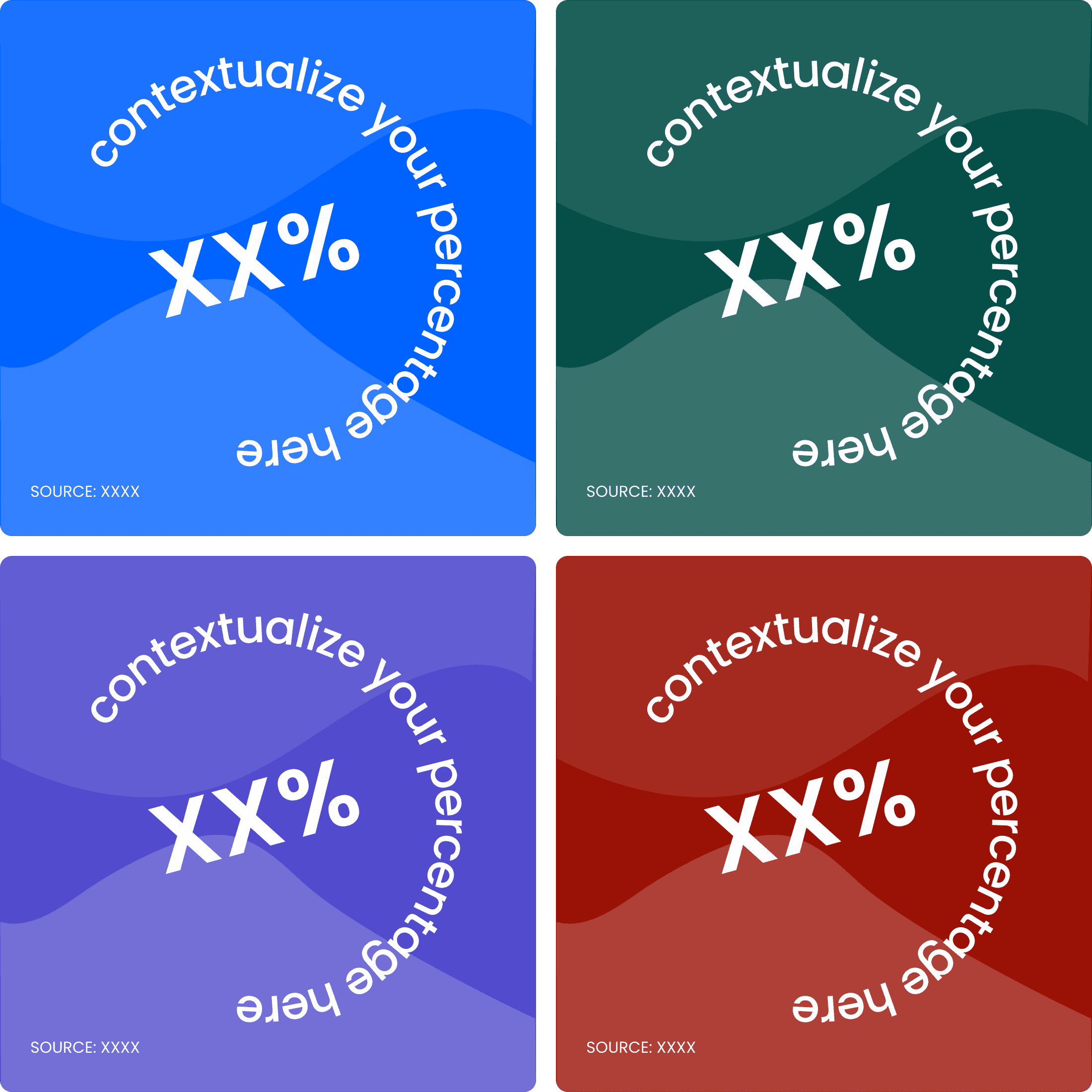
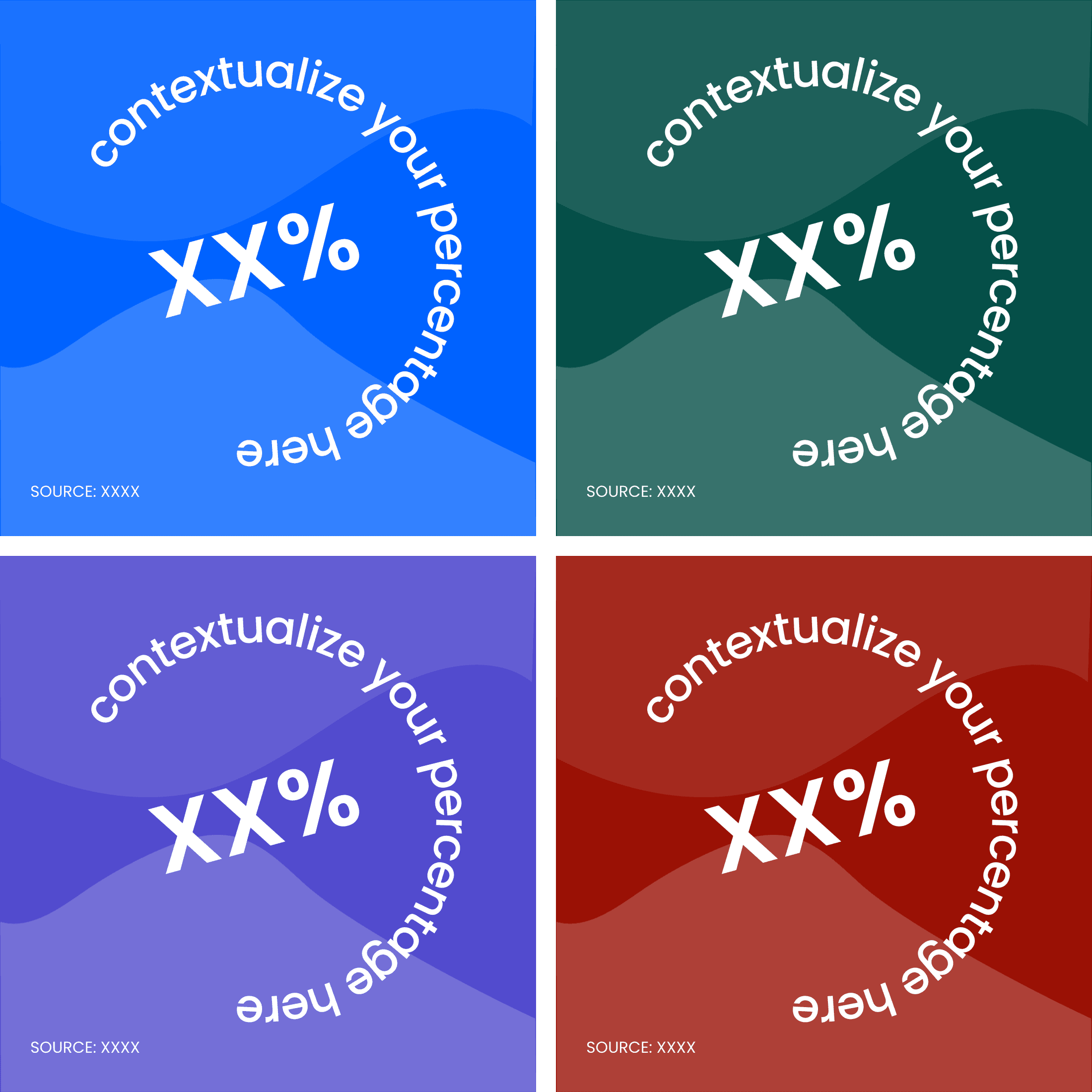
A single template was adapted across multiple color palettes to support different communities while maintaining consistent structure and messaging.
Content Production at Scale
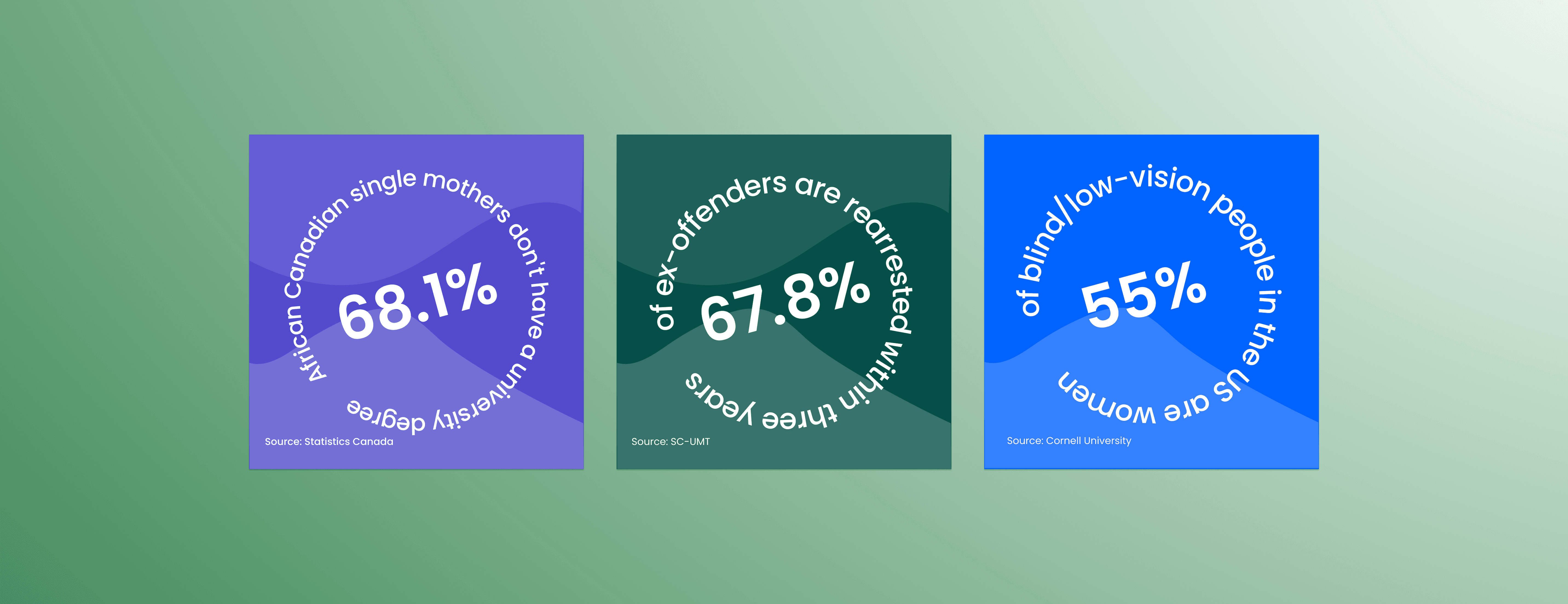
Using the template system, I transformed Jobs for Humanity’s research reports into digestible, shareable content across social media and blogs. Each asset was designed to highlight key insights clearly and respectfully—prioritizing legibility, context, and emotional clarity over visual noise.
This approach enabled JFH to publish content consistently across multiple communities while reducing the ongoing effort required from staff and volunteers.
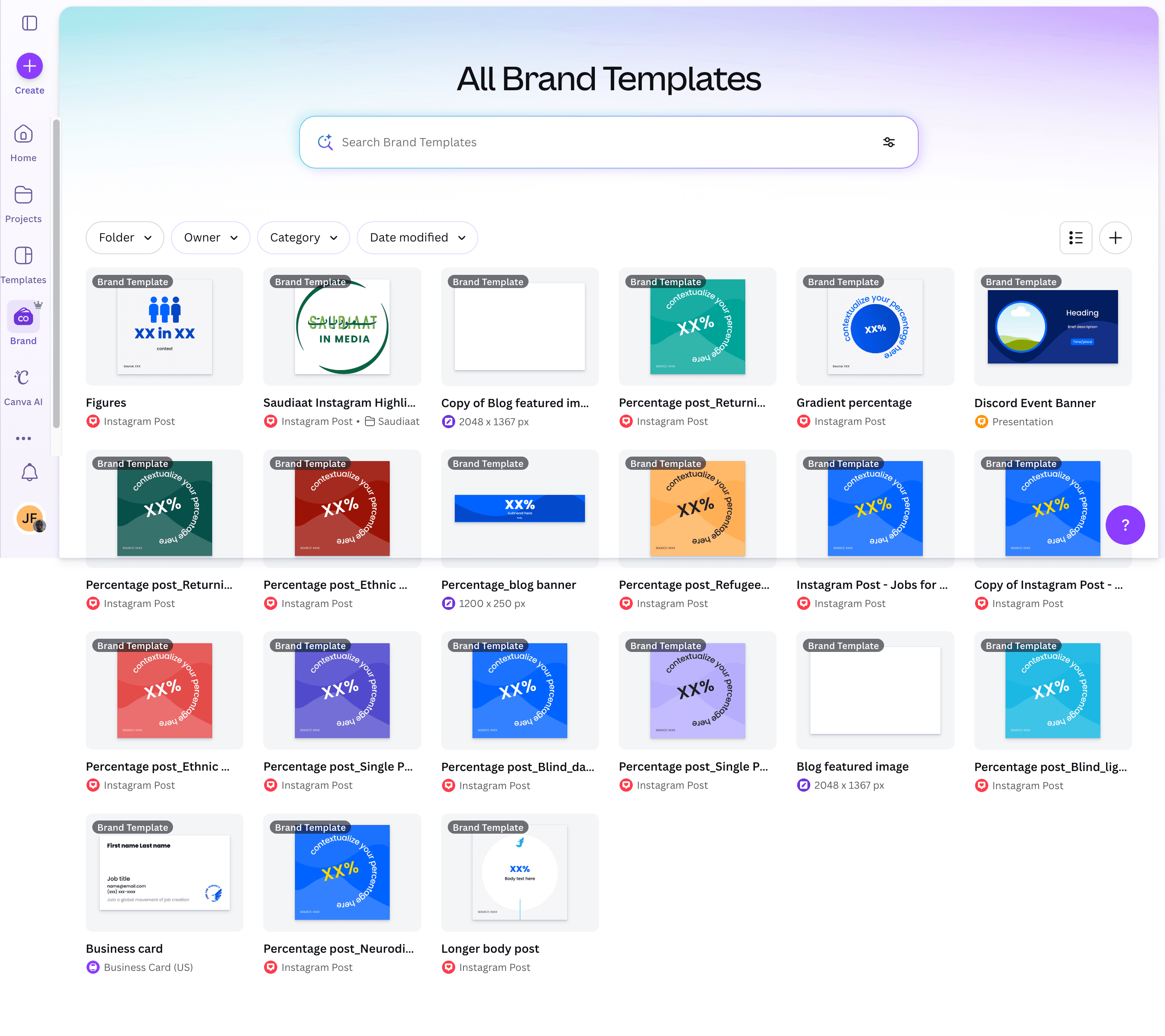
All templates and assets were organized and delivered through Canva, enabling future volunteers to quickly create on-brand content without design support.
Website Wireframes & Onboarding Flows
In parallel, I collaborated with the CEO and Principal Product Designer to wireframe new pages and onboarding flows for Jobs for Humanity’s website. Each flow was structured around the distinct goals of employers, community organizations, and job seekers—ensuring users could quickly understand how JFH supports them and how to engage.
The resulting wireframes emphasized clarity, trust, and ease of use, helping translate JFH’s mission into actionable entry points for each audience.
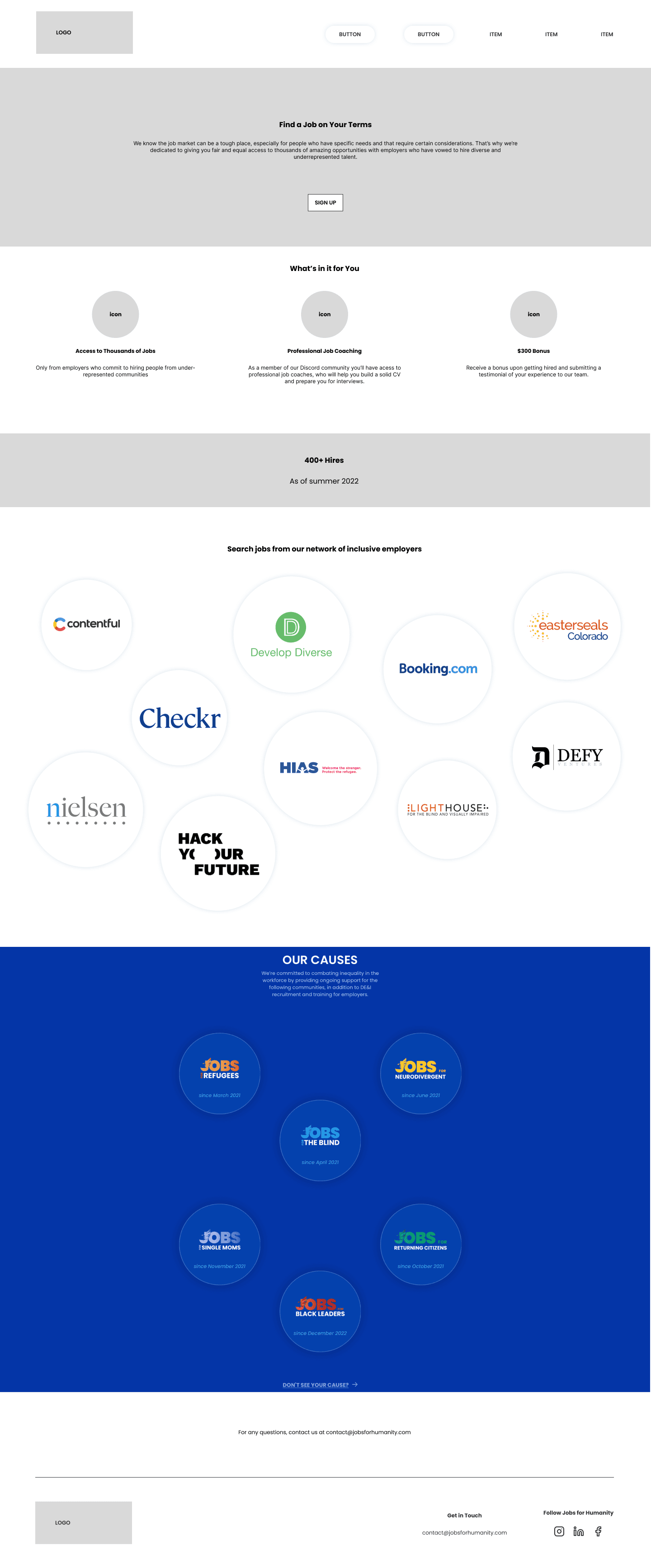
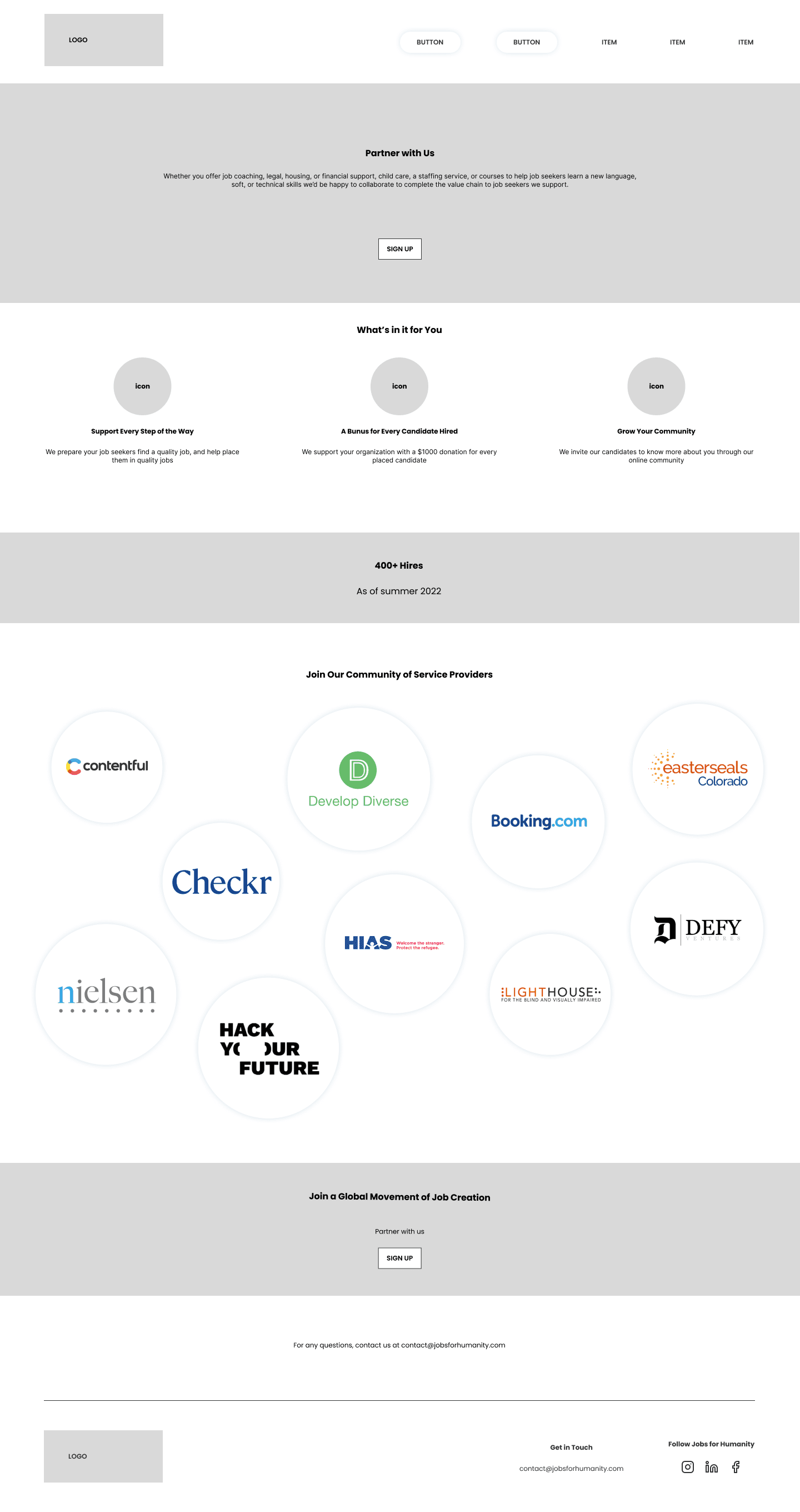
Early wireframes exploring employer, community organization, and job seeker flows—focused on clarity, trust, and reducing friction across distinct user needs. (Job seeker and community organization landing pages shown here).
Outcomes & Impact
Designing for Longevity
During my internship, the systems and templates I created were actively used by Jobs for Humanity to publish new content across platforms. The organization shared positive feedback from community members, who found the posts validating, accessible, and engaging.
Impact highlights:
20 reusable design templates
51 social media posts
23 blog articles
3 website page wireframes
2 onboarding flows
“Claire is a star… She was able to produce in a summer what three interns could have done in the same period.”
— Roy Baladi, CEO, Jobs for Humanity